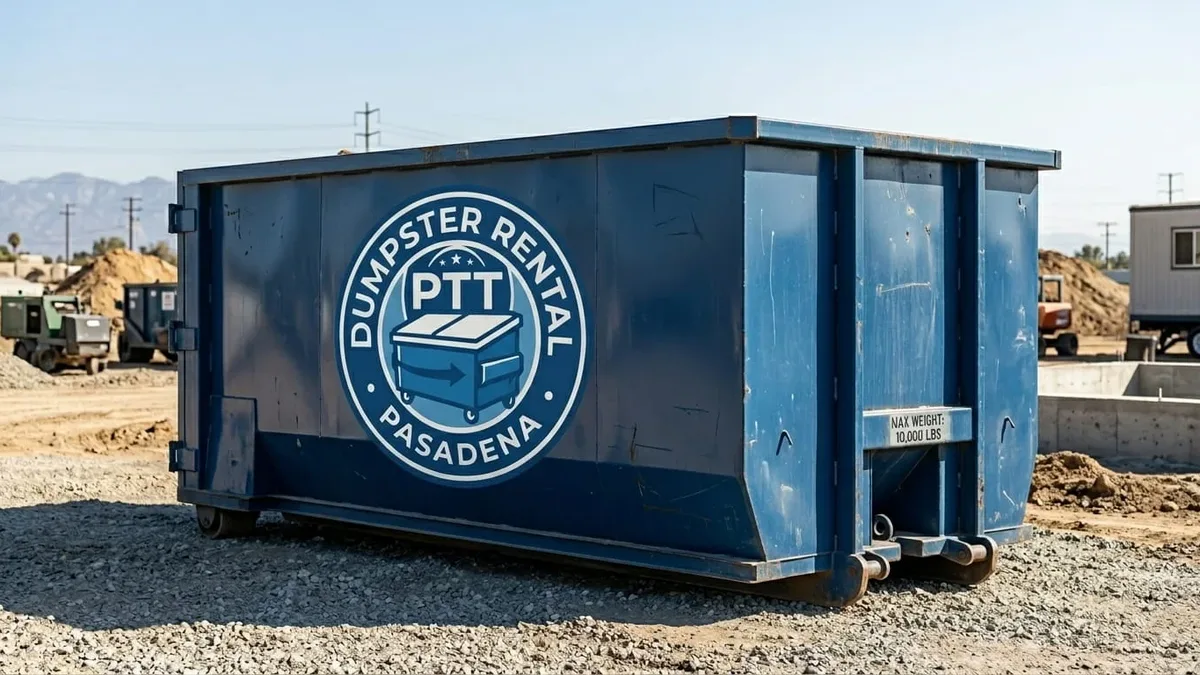
Most of what comes out of a cleanout, remodel, or jobsite is fine to toss straight into a rental dumpster. But California has a specific, statewide list of items that are banned from regular trash and landfill disposal — which means they’re banned from a rental container too, regardless of what city or county you’re in. Knowing the list before your dumpster arrives saves you from having to pull items back out later. Here’s the full picture, for Pasadena, Altadena, and anywhere else in our San Gabriel Valley service area.
What’s Fine to Throw In
The large majority of general household and construction debris is welcome in a standard rental dumpster: furniture, boxed-up belongings, clothing and textiles, carpet and flooring, drywall, lumber, cabinetry, roofing shingles, siding, fencing, general yard waste, and non-hazardous construction and demolition debris from remodels, tear-outs, and cleanouts. If you’re doing a whole-house cleanout, an estate cleanout, or a construction project and you’re not sure whether a specific item is fine, it’s always faster to ask when you book than to guess. Our residential dumpster rental, junk removal, and demolition debris removal services all cover this kind of general debris.
Batteries: Banned Statewide, No Exceptions by Type
Every type of battery — AAA, AA, C, D, button-cell, 9-volt, rechargeable, and lead-acid — is banned from regular trash and household recycling bins under California law, per the state Department of Toxic Substances Control’s Universal Waste rules. This applies whether the battery is dead, damaged, or still holding a charge. Batteries need to go to a household hazardous waste collection site or a retailer that accepts battery take-back, not into a dumpster, a curbside bin, or a recycling tote.
Electronics and E-Waste: Also Banned from the Trash
TVs, computer monitors, computers, printers, radios, microwaves, cell phones, and similar electronic devices are banned from regular trash under CalRecycle’s list of wastes prohibited from landfill disposal. Like batteries, this means e-waste doesn’t belong in a rental dumpster either — it needs to be routed to a certified e-waste recycler or a designated collection event. If you’re clearing out an office, garage, or estate full of old electronics, plan on a separate e-waste drop-off alongside your dumpster rental rather than trying to fold it into the same load.
Tires: A Separate Recycling Stream
Waste tires are banned from dumpsters and landfill disposal statewide. California funds a dedicated tire-recycling program through a fee collected at point of sale specifically so tires have their own recycling route — a certified tire recycler or a retailer that accepts old tires when you buy new ones, not the dumpster on your driveway.
Asbestos: Never Permitted, No Exceptions
Asbestos-containing material — old insulation, certain tile adhesives, some older siding and roofing products — is never allowed in a rental dumpster, full stop. It requires a licensed abatement contractor for safe removal and disposal, regardless of the size of the job or how small the amount seems. If you’re working on an older home in Pasadena, South Pasadena, or Altadena and you suspect asbestos-containing material, get it tested and handled by a licensed professional before any demolition work starts.
Paint, Fuel, and Household Chemicals
Paint and solvents, motor oil, filters, and antifreeze, fluorescent lamps and tubes and LED lights, compressed gas cylinders like propane tanks, mercury-containing items, and pesticides or herbicides are all banned from regular trash and therefore from a rental dumpster as well. Most of these have a straightforward disposal path through a household hazardous waste collection facility or, for motor fluids and some paints, a retailer take-back program. Chemically treated wood is banned right alongside asbestos-containing material for similar reasons and needs the same kind of specialized handling.
Why the Rules Exist and Why They’re Consistent Statewide
These bans aren’t local quirks — they apply the same way whether your project is in Pasadena, unincorporated Altadena, or any other California city, because they’re set at the state level by CalRecycle and DTSC rather than by individual municipalities. That consistency is useful: no matter which of our nine service-area towns your project is in, the prohibited-items list doesn’t change. What can change locally is the permit process if your container needs to sit in the public right-of-way, which is a separate question covered in our permit guide.
When You’re Not Sure, Ask Before You Load
If you’ve got a mixed pile — old furniture next to an old TV, half a can of paint sitting on top of construction debris — the easiest fix is to sort the prohibited items out before the dumpster shows up, or ask us when you book. It’s a lot simpler to set a battery or a paint can aside from the start than to dig it back out of a full container. This matters most on larger jobs like estate cleanouts, where decades of accumulated items are more likely to include a few of these banned categories — our estate cleanout service is used to sorting through exactly that kind of mix.
Questions About Your Specific Debris? Call Us
If you’re not sure whether something on your pile is fine for the dumpster, the fastest answer is a phone call before delivery, not a guess after. We can tell you what’s fine, what needs a separate disposal route, and how to size your container once the prohibited items are set aside — see our sizing guide for that part. Call PTT Dumpster Rental at (626) 740-2880, or browse our full services lineup for the right container type for your project.