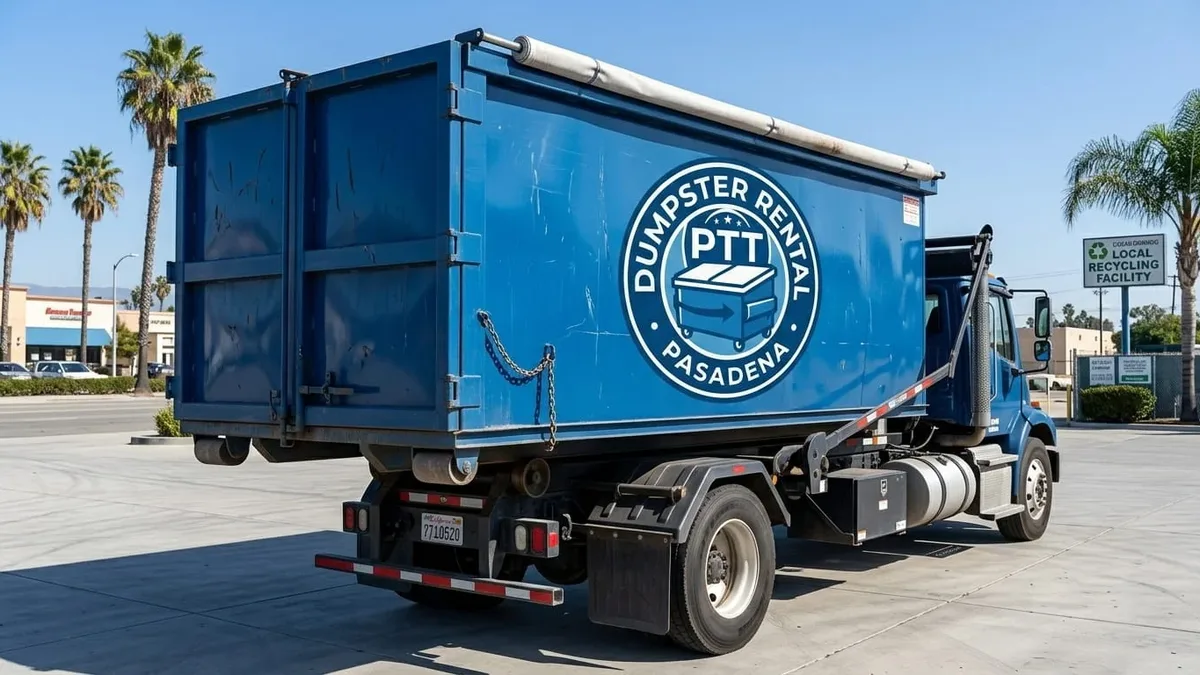
Most of what fills a dumpster — furniture, construction debris, general household clutter — is straightforward. But California has a specific, statewide set of rules about what can never go in the regular trash or a general debris container, and Los Angeles County residents run into these rules more often than they might expect, usually while clearing out a garage, a kitchen drawer, or an old office. Here’s a practical rundown of what governs what, and where the exceptions actually belong.
What CalRecycle Actually Governs
CalRecycle is the state agency responsible for California’s waste reduction and recycling policy — it sets the statewide list of materials banned from regular trash disposal, oversees recycling infrastructure funding, and coordinates programs like the state’s tire recycling fee. It doesn’t run neighborhood pickup itself; that’s handled locally by each city or, in unincorporated areas like Altadena, by the county. What CalRecycle does set is the baseline rules everyone in the state has to follow, regardless of which city collects the trash.
What a Dumpster Rental Handles vs. What It Doesn’t
A roll-off dumpster is built for bulk debris — construction material, furniture, general clean-out waste, yard debris, demolition material. It is not a legal disposal channel for a specific short list of items that California requires to be handled through dedicated recycling or hazardous-waste programs instead, no matter how small the quantity. That list is short but worth knowing before a batch of it ends up loaded into a container by accident: batteries, electronics, fluorescent lighting, paint and solvents, motor oil and automotive fluids, and a few other regulated categories covered below. Everything else — the overwhelming majority of what a typical clean-out or jobsite generates — is exactly what a dumpster is for. Our what can and can’t go in a dumpster guide has the fuller breakdown by category.
Batteries: Banned From the Trash Statewide
Every type of battery — standard alkaline AAA through D cells, button cell, 9-volt, rechargeable, and lead-acid car batteries — is banned from regular trash and household recycling bins throughout California, under the state Department of Toxic Substances Control’s Universal Waste regulations. In practice, this means batteries need to go to a household hazardous waste facility, a battery-specific drop-off, or a retailer take-back program rather than the trash, the recycling bin, or a dumpster. Many hardware stores and electronics retailers maintain in-store battery collection bins specifically to make this easy, since the rule applies to a single loose 9-volt just as much as a full case of them.
Electronics and E-Waste: Where They Actually Go
TVs, computer monitors, desktop and laptop computers, printers, and similar electronics are also banned from regular trash statewide, per CalRecycle’s list of banned materials. The practical path for most of these is a certified e-waste recycler or a retailer take-back program — several major electronics retailers, including Best Buy, accept a range of consumer electronics for recycling regardless of where the item was originally purchased, and LA County maintains permanent household hazardous waste and e-waste collection sites as well. A cell phone or old monitor sitting in a closet doesn’t belong in a dumpster load any more than it belongs in the regular trash — route it to one of these channels instead.
Other Items That Need a Separate Channel
Beyond batteries and electronics, a handful of other categories are banned from regular trash and dumpster disposal alike: fluorescent tubes and LED lighting, paint and solvents, motor oil, filters and antifreeze, pesticides and herbicides, mercury-containing items like old thermostats, and compressed gas cylinders such as propane tanks. Waste tires fall under a related but separate system — California collects a recycling fee at the point of sale specifically to fund tire recycling, so tires need to go to a certified tire recycler rather than a general debris container. Asbestos-containing material is in its own category entirely: it’s never permitted in any container, dumpster or otherwise, and always requires a licensed abatement contractor.
Building a Simple Sorting Habit
The easiest way to stay compliant without overthinking it, whether you’re clearing a house or running a jobsite, is to set aside a small separate box or bag at the start of the project specifically for batteries and small electronics as they turn up — they tend to surface throughout a clean-out rather than all at once. For paint, oil, and larger hazardous items, a single trip to a household hazardous waste facility at the end of the project usually covers everything at once. This small habit avoids the more common problem, which is finding a banned item already loaded near the bottom of a full dumpster.
Where a Dumpster Still Makes Sense
None of this changes the fact that a dumpster is still the right tool for the large majority of debris a clean-out, remodel, or jobsite generates. Whether you’re working on a residential cleanout, an estate cleanout, or a construction project anywhere in Pasadena, Altadena, or the wider San Gabriel Valley, the goal is simply pulling the small list of regulated items aside before the rest goes in. Our size guide covers the container that fits your project once that sort is done.
Questions Before You Sort
If you’re not sure whether something belongs in the dumpster or needs a separate recycling channel, it’s faster to ask than to guess. Call PTT Dumpster Rental at (626) 740-2880 and describe what you’re clearing out — we’ll tell you what goes in the container and what needs to be routed elsewhere first. Our FAQ page also covers disposal rules alongside the rest of our booking and sizing details.