Dumpster Placement Tips for the San Gabriel Valley
Where a dumpster actually sits matters as much as what size you book — tight lots, hillside driveways, and HOA rules all shape the delivery. Here’s what to think through before the truck shows up.
Pasadena dumpster guide
For property owners currently rebuilding in Altadena and the surrounding foothills, here’s a straightforward guide to sizing a dumpster for new-construction debris, the permit process for a cleared lot, and what kind of debris removal a private dumpster company can and can’t handle.
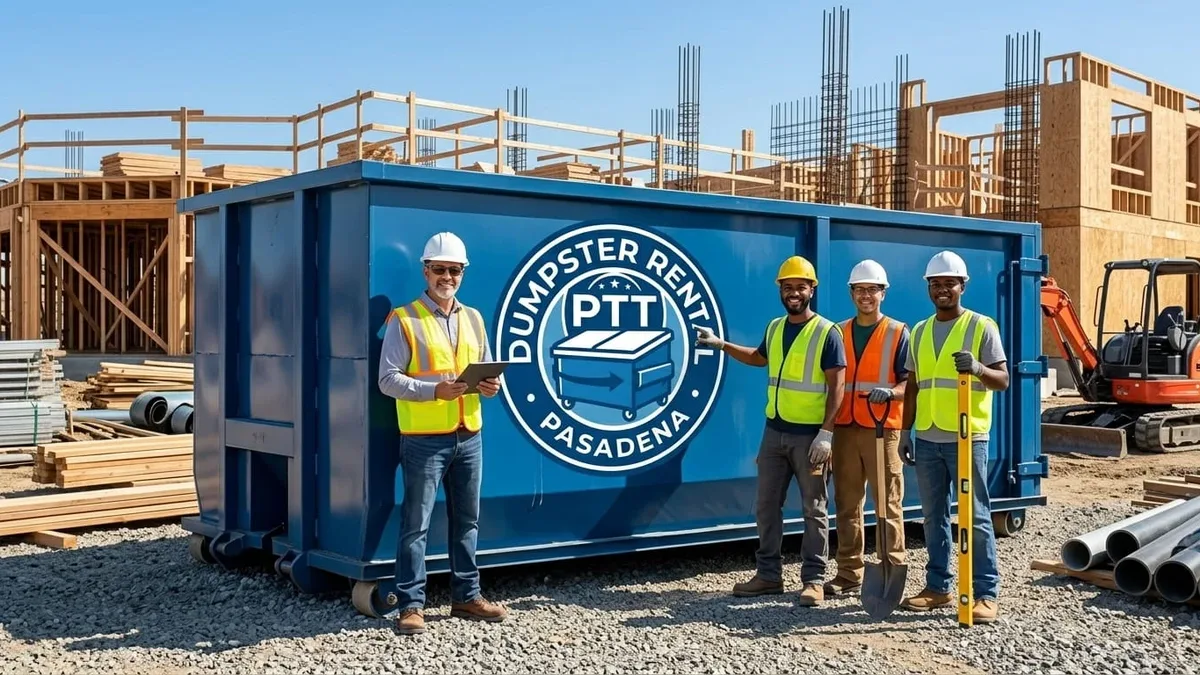
The Eaton Fire in January 2025 was one of the most destructive wildfires in California history, and it devastated large parts of Altadena — the same community where our yard sits, on Fair Oaks Ave. As of today, rebuilding is well underway across the foothills, with lots cleared and new construction starting up on properties throughout the area. This guide is written for property owners currently in that rebuild phase — sizing a dumpster for new-construction debris, understanding the permit process for a cleared lot, and knowing exactly where a private dumpster rental fits into the project and where it doesn’t.
Let’s be direct about this, because it matters. If your property still has fire or ash debris from a destroyed structure on it, that material is classified as hazardous waste — it can contain asbestos, lead, and other heavy metals from burned building materials, appliances, and vehicles. Removing it is not a job for a rental dumpster or a private hauling company. That work is handled exclusively through official government debris removal programs: the EPA’s Phase 1 household hazardous waste removal, followed by Phase 2 debris removal coordinated by the Army Corps of Engineers and LA County Public Works. We are not part of either program, we don’t handle fire or ash debris removal from destroyed structures, and no private dumpster company legally should. If your property is still waiting on or moving through the official Phase 1 or Phase 2 process, that’s the right channel — a rental dumpster is not a substitute for it.
Once a property has been through the official debris removal process and the lot is cleared down to bare land, the project moves into an entirely different phase — and that’s where a standard rental dumpster becomes genuinely useful again. New construction generates its own debris stream: packaging from delivered materials, framing offcuts, drywall scraps, damaged or excess lumber, and general jobsite waste as a home goes back up. That’s ordinary construction debris, no different from any other new-build project we service, and it’s exactly what our construction dumpster rental service is built for.
New-build construction on a cleared lot typically calls for our larger containers. The 30-yard dumpster — 22 ft × 7.5 ft × 6 ft, about 9 pickup-truck loads, 4–5 tons — is our size specifically suited to new-build construction, and it’s a common choice for a rebuild project of typical single-family scale. For a larger custom rebuild or a project generating a steady volume of framing and drywall waste over several weeks, the 40-yard dumpster — 22 ft × 7.5 ft × 8 ft, roughly 12 pickup-truck loads, 5–6 tons — may be the better fit, particularly for larger demolition-adjacent site work or commercial-scale rebuilds. Many contractors managing a multi-month rebuild prefer one of these larger sizes specifically so they’re not coordinating frequent swaps mid-project. If your rebuild is smaller in scope, or you’re further along and down to finish work and cleanup, our full sizing guide covers all five sizes in detail.
Altadena is unincorporated Los Angeles County, so any dumpster that needs to sit in the public right-of-way — the street in front of a cleared lot, for instance, rather than fully within the property line — falls under LA County Public Works’ Drop Box (Roll-Off Bin) Permit, processed through the County’s EPIC-LA system. This is the same process that applies to any unincorporated-area placement, not a special rebuild-specific permit, and only LA-County-approved vendors may place bins in the right-of-way under it. As with any LA County permit, no flat fee is published, so call LA County Public Works directly to confirm current cost and any conditions for your address. If your rebuild lot has enough cleared space to place the container fully on the property itself rather than in the street, no permit is needed at all — our full permit guide covers this distinction, along with the separate process that applies inside the City of Pasadena for rebuild or renovation projects there.
Not every property in the area was destroyed — plenty of parcels nearby experienced smoke damage, fencing loss, damaged landscaping, or general debris without structural loss, and many owners are doing renovation or cleanup work rather than a full rebuild. For that kind of project — damaged fencing removal, dead or fire-stressed landscaping cleanup, general yard debris, or interior renovation debris from smoke remediation — a standard dumpster rental works the same way it would for any residential job. Our yard waste dumpster rental and residential dumpster rental services both apply here, sized to the actual scope of the cleanup rather than treated as fire debris removal.
Once you’re in the construction phase of a rebuild, the same disposal rules apply as any other build in California. General construction debris — lumber, drywall, packaging, roofing material as the new structure goes up — is fine for a standard container. Batteries and electronics from any temporary jobsite equipment or trailers are still banned from regular disposal under California law, and materials like paint, solvents, and treated wood still need their proper disposal route rather than the dumpster. Our full guide to what can and can’t go in a dumpster covers the complete list, and it applies exactly the same way on a rebuild site as it does anywhere else.
Rebuild sites often have shifting access as foundation work, framing, and material deliveries move through different stages, so it’s worth calling ahead of each phase rather than assuming last month’s placement still works. Tell us where the site currently stands — foundation poured, framing underway, nearing finish work — and we’ll help you time delivery and pickup around your contractor’s schedule rather than working around a container that’s in the wrong spot for the current phase.
If you’re currently rebuilding in Altadena or anywhere in the surrounding foothills, call us and describe where your project stands. We’ll help you size the right container for the construction phase you’re in and walk you through the LA County permit process if your placement needs it. Call PTT Dumpster Rental at (626) 740-2880, Monday through Saturday, or see our construction dumpster rental page for more on how we support build projects from foundation to finish.
FAQs
No. Fire and ash debris from a destroyed structure is classified as hazardous waste — it can contain asbestos, lead, and other heavy metals — and its removal is handled exclusively through official government programs: EPA Phase 1 household hazardous waste removal, followed by Army Corps of Engineers and LA County Public Works Phase 2 debris removal. We are not part of these programs and do not perform this work.
Yes. Once a lot has gone through the official debris removal process and is cleared to bare land, standard construction dumpster service applies just like any other new-build project — sized for framing offcuts, drywall, packaging, and general jobsite debris as the new home goes up.
Most single-family rebuilds do well with a 30-yard dumpster, which is sized specifically for new-build construction. Larger custom rebuilds or longer-duration projects sometimes call for a 40-yard instead. Call and describe your rebuild’s scope and we’ll recommend the right size.
Only if the container needs to sit in the street or another public right-of-way rather than fully on your property. Since Altadena is unincorporated LA County, that permit is LA County Public Works’ Drop Box (Roll-Off Bin) Permit through EPIC-LA. If the container fits entirely on the lot itself, no permit is needed.
Yes — that kind of cleanup, including damaged fencing, fire-stressed landscaping, or smoke-remediation renovation debris, is a standard residential or yard waste dumpster job, sized to the actual scope of your project.
Yes. General construction debris is fine in a standard container, but batteries, electronics, paint, and similar items are still banned from disposal under California law on a rebuild site the same as anywhere else.
Ready when you are
Call and you will speak to someone local who knows the streets, the permit rules and which box actually fits your lot. Flat rate quoted up front.
Keep reading
Where a dumpster actually sits matters as much as what size you book — tight lots, hillside driveways, and HOA rules all shape the delivery. Here’s what to think through before the truck shows up.
A dumpster handles most debris, but a handful of common household and jobsite items are legally required to go somewhere else entirely. Here’s how California’s recycling rules actually work, and where those items belong instead.
Sizing a dumpster comes down to two questions: how much space your debris takes up, and how much it weighs. Here’s how our five sizes break down — and why the second question trips up more Pasadena-area projects than the first.